Ten tips for avoiding forklift damage to pallets.
Damaged pallets reduce productivity and increase costs, and are often caused by forklifts. Pallets and their repair costs can increase over time, affecting your bottom line. While they can be damaged in many different ways, mishandling by forklifts is a common cause. Fortunately, many instances of damage to pallets can be avoided with careful handling and intensive training.
Damaged pallets reduce productivity and increase costs, and are often caused by forklifts.
Pallets and their repair costs can increase over time, affecting your bottom line. While they can be damaged in many different ways, mishandling by forklifts is a common cause.
Fortunately, many instances of damage to pallets can be avoided with careful handling and intensive training.
01. Reduce vehicle speed
This is one of the most important tips for limiting forklift damage and will relate to many of the other tips you'll read about below.
Decelerating gives the forklift operator more reaction time to properly handle the pallet and reduces short forks, improperly spaced tines and other errors.
In addition, slowing down prevents the gantry, fork tines or other parts of the lift from hitting the pallet or the product it is carrying, and less rushed operations and more gentle use of the forklift will also extend the life of the forklift.
Important times to slow down are when picking up a load and when putting it down. This is also critical when stacking or forking pallets.
02. Use the right pallet
Does the pallet have sufficient load carrying capacity?
Small differences in the size of the pallet material and structural layout can make a big difference in its load carrying capacity.
Overloaded or incorrectly loaded pallets are more likely to break, crack or splinter and are more likely to be damaged by improper forklift handling.
Weight distribution is another important factor in using the right pallet. Even if the pallet meets the load weight, uneven weight distribution can affect performance.
Improper weight distribution can stress the pallet in ways it was not designed for, leading to failure. The use of a Pallet Design System (PDS) can help ensure that the pallet is properly loaded and able to perform its intended purpose.
03. Don't turn until the fork tines are completely withdrawn from the pallet
The type of damage that is harmful to a pallet is damage to the longitudinal beams. These are the critical components that hold the pallet together, and failure of the longitudinal beams will immediately result in a significant loss of the pallet's load carrying capacity.
This particular type of damage is usually caused by the forklift driver releasing the load too early and turning away from the pallet, which can allow the fork tines to impact the longitudinal beams, which can lead to strain and damage.
The forklift driver must ensure that the fork tines are completely withdrawn from the pallet before turning out of the pallet.
04. Do not drag or push pallets
"Dragging" pallets means pushing them across the floor.
Pallets are not designed to be pushed along the floor, and doing so puts undue lateral stress on the pallet and destroys its load-carrying capacity.
Dragging can also cause physical damage to the components of the pallet, weakening them and increasing the chance of failure.
05. Do not use short fork pallets
Short forks are forklift truck tines that are not fully inserted into the pallet before lifting. Ensure that the front of the forklift's door frame is as close to the pallet and product as possible and that the pallet's underside is on the tines.
The pallet is designed to support the weight of the product and requires full insertion of the fork tines. When the fork tines are not fully inserted, additional pressure is placed on the deck and nails of the pallet, which stresses the pallet and makes failure or damage more likely.
Pallets are also more likely to slip and fall when short forking, especially when handled in a hurry.
06. Proper use of pallet spaces
Fork tines should be inserted easily and evenly into the pallet and should not come into contact with any part of the pallet before lifting the load.
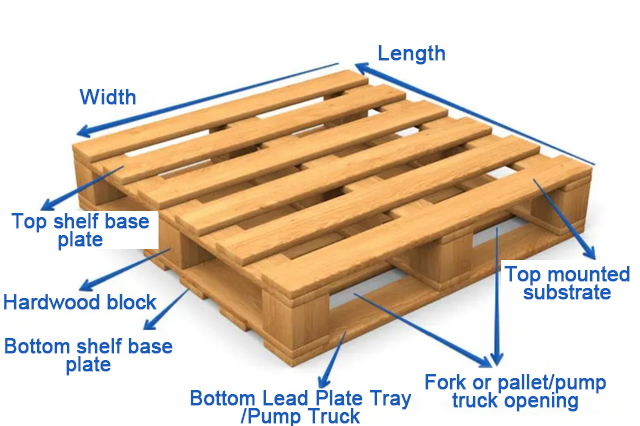
When spaced incorrectly, the fork tines may strike the longitudinal beams, causing damage and impairing the performance of the pallet. Ensuring that the fork tines do not interfere with intermediate or external pallet supports will make your pallet last longer.
Using pallets with beveled beams can also reduce this problem as it helps guide the fork tines into the pallet.
07. Spreading the fork tines before lifting
Before lifting a pallet, the tines of the forklift should be spread as far apart as possible to spread the load.

If the forklift has an automatic fork tine spacing capability (e.g., pitch forks), the tines can be spread after entering the pallet.
If tine spacing must be accomplished manually, they should be spread prior to entering the pallet. Proper spacing makes the pallet and load more stable and reduces the amount of stress applied to the pallet.
08. Colored fork tines with high visibility
Coloring the top and tips of the fork tines helps forklift operators see them better through the pallet.
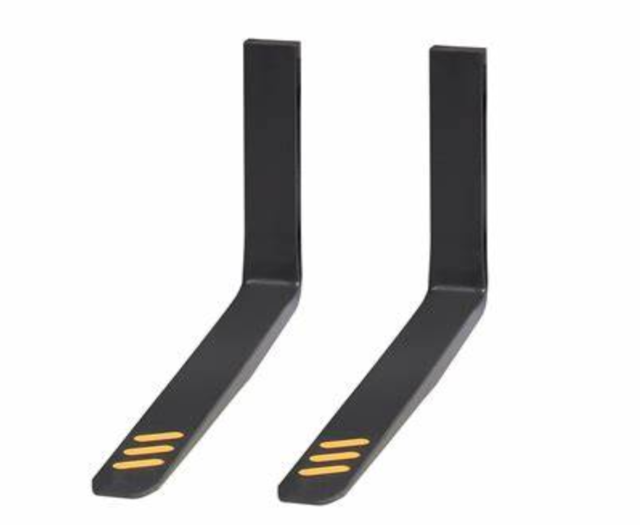
This is useful from a safety perspective, not only because the driver will be more aware of the reach of the tines, but also because the tines will be more visible to those around the forklift.
Additionally, if damage occurs, the paint may rub against the pallet or product and help identify what caused the damage. If a different color is used for each forklift, it will be much easier to identify the forklift and the operators involved.
09. Stack pallets evenly
Pallets should be stacked evenly. Just as it is important to ensure that the weight of the product is correctly distributed across the pallet, it is also important to ensure that the pallets are square and aligned when stacked.
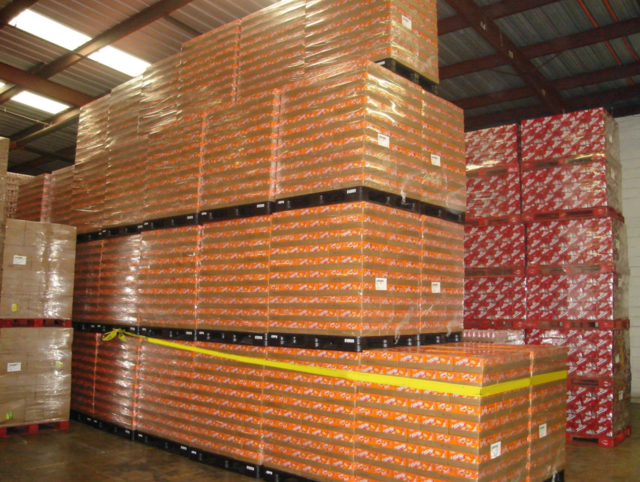
This prevents uneven weight on certain parts of the pallet (e.g. corners and lead boards).
Centralized and square pallet stacks also prevent pallets from tilting and falling, a major safety hazard.
10. Organizing the warehouse
This method is not as quick and easy as others, but can be very effective in certain warehouse layouts.
The more open space there is in the warehouse, the less the forklift can touch. It also controls the risk of pallet damage by reducing the likelihood of bumps and knocks.
In addition, floors should be clean and free of debris. Forklifts shake and bounce as they run over wood chips and other debris. Not only does this put your driver at potential risk, but it also puts the pallet under sudden stress as it bounces on the fork tines. Bouncing also puts the pallet and its products at risk of falling, which can lead to worker injuries.